
Property Hain Raashan Nahi, Likha Padat Zaroori Hain - Baashan Nahi !
"Delhi's # 1 Deed Drafting & Registration Platform."
"Your Property Is Only As Strong As The Ink On The Paper."
Don’t let a “Standard Template” ruin a lifetime of investment. From Agreements to Sales, we draft bulletproof documents that stand the test of time and law. A weak deed is a future lawsuit. A DeedWala document is a Legacy.
What is A Deed?
A Deed is the “Physical Soul” of your ownership. It is the only document the Sub-Registrar accepts as a proof to prove you are
the king of your kingdom.
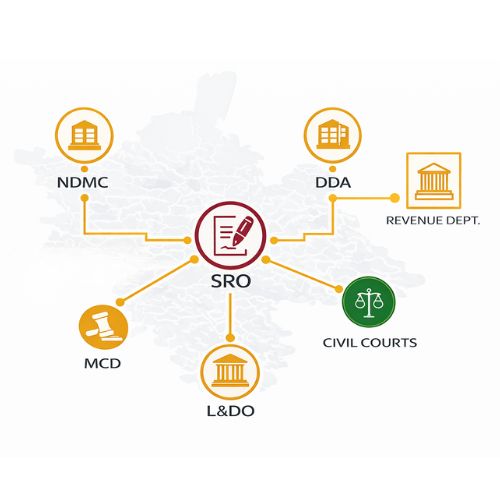
We don’t just “fill forms.” We understand the Paper-Chain from Allotment to Registration. We ensure your deed is compatible with DDA, L&DO, MCD and other competent authority’s records.
Types of Deeds
1. OWNERSHIP TRANSFER
These are the heavy hitters. They change who owns the “Title.”
Sale Deed
The most common. It transfers absolute ownership from Seller to Buyer for a "consideration" (money)
Gift Deed
Used to transfer property to a relative out of "love and affection" without any money changing hands
Relinquishment Deed
Often known as " Tyaag Patra", when one co-owner (usually an heir) gives up their share in a property in favour of other co-owners
Release Deed
Similar to relinquishment, but can be used in more general commercial contexts to "release" a claim or right
Exchange Deed
When two parties swap properties of similar value
2. THE FAMILY & INHERITANCE DEEDS
Partition Deed
Legally divides a joint/ ancestral property into specific portions for each co-owner, giving each a clear, individual title
Settlement Deed
Often used to settle family disputes or distribute property during the lifetime of the patriarch/ matriarch to avoid future litigation
Will Deed
Technically becomes a "deedlike" instrument upon death. It dictates who gets what
Trust Deed
Created to place a property under the management of "Trustees" for the benefit of "Beneficiaries" (often used by wealthy families for estate planning)
3. THE TEMPORARY & RIGHTS DEEDS
Lease
Deed
For long-term rentals (usually 11 months or more). It must be registered to be legally binding
Sub-Lease
Deed
When a tenant leases the property to another party (with the owner's permission)
Surrender of Lease Deed
When a tenant gives up the lease before the expiry date and hands the property back to the owner
Mortgage
Deed
When you take a loan against the property. The bank keeps the "Right to Sell" if you don't pay
Re-conveyance Deed
The deed the bank signs to give the property rights back to you once the loan is fully paid
4. THE AUTHORITY DEEDS
General Power of Attorney (GPA)
Gives broad powers to someone to manage, sell, or handle the property. (Note: In Delhi, GPA is no longer a "Transfer" document, but it's still used for management)
Special Power of Attorney (SPA)
Gives power for one specific act (e.g., "Only to sign the Sale Deed at the Sub-Registrar office")
5. THE CORRECTION & SUPPORT DEEDS
Correction Deed (Rectification Deed)
Used to fix typos, wrong plot numbers, or spelling mistakes in a previously registered Sale Deed
Cancellation Deed
Used to legally nullify a previously registered deed (if both parties agree or by court order)
Confirmation Deed
Used when a previous deed had a legal flaw, and you need a second deed to "confirm" that the transaction was valid
Revocation Deed
Used to cancel a Gift Deed or a Power of Attorneу
6. THE "UPGRADE" DEEDS (Specific to DDA, L&D0)
Substitution Deed
Used in DDA/L&DO when an original allottee dies and the "Substitution" of a legal heir's name is required in the records
Supplementary Deed
Used to add new terms or conditions to an existing agreement without changing the core structure
7. THE "NON-DEED" POWER PAPERS
Because a property journey starts, a way before the registry.
Agreement to Sell (ATS)
The most critical "Vachan" paper
Allotment & Possession Letters:
The "Birth Certificate" of your DDA/L&DO/Society property
Collaboration Agreements
The agreement between land owner and developer mentioning the terms
NOCs
& Affidavits
The legal permission & documents that makes or breaks a file
Risks Without A Legal Deed?
1. The “Title Gap” (Ownership at Risk): If the deed isn’t drafted correctly or lacks a “Vesting Clause” you might pay the money but never legally own the property.
Risk: The seller remains the owner in government records, and they could sell it to someone else again (Double Registry).
2. Income Tax Nightmares (Section 50C): If the deed doesn’t properly align the “Sale Consideration” with the “Circle Rate,” the Income Tax department can flag it.
Risk: You could receive a heavy tax notice and penalties for “undisclosed income,” even if you paid everything honestly.
3. The “Indemnity” Trap (Inheriting Debts): A standard typist’s deed often misses a strong Indemnity Clause.
Risk: If the previous owner had unpaid bank loans, electricity bills, or property taxes, you become legally responsible to pay them once the deed is signed.
4. Registry Rejection & Forfeiture: Sub-Registrar offices in Delhi-NCR are strict. Small technical errors in the deed lead to rejection.
Risk: If the deed is rejected on the last date of your “Agreement to Sell,” you might lose your entire Bayana (advance payment) because you failed to complete the transaction on time.
5. Future Sale Blocks (Resale Value):
When you try to sell the property 10 years later, the buyer’s lawyer will audit your deed.
Risk: If there is a typo in the plot number or a missing witness signature in your old deed, no bank will give a loan to your future buyer. Your property becomes “Unsellable.”
6. Legal Heir “Mahabharat”:
If the deed doesn’t clearly mention that the property is “free from all encumbrances” and “family claims.”
Risk: A long-lost relative of the seller can show up years later and file a stay order on your house, claiming they
never signed off on the sale.
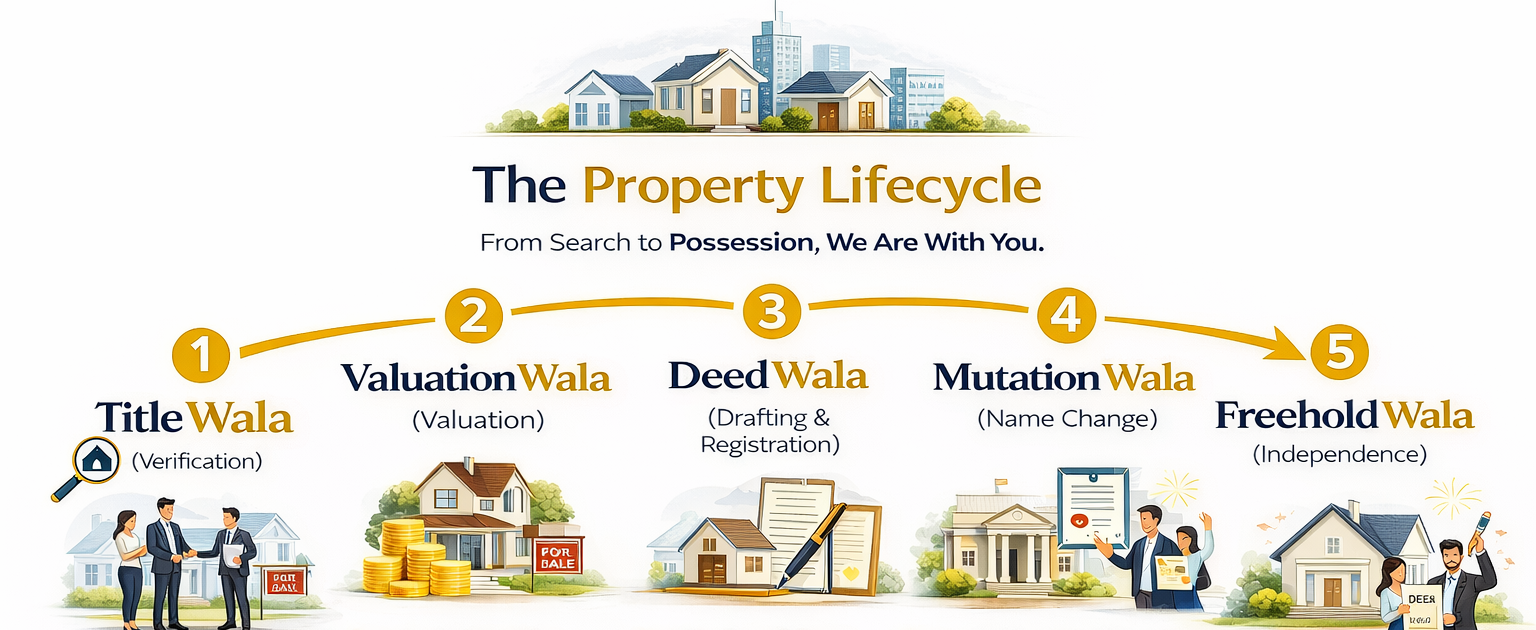
7. Mutation Failure: A deed is just Step 1. If the deed language doesn’t match the “Lal Dora” or “MCD” records exactly, the Mutation Wala
Department (government) will refuse to change the name.
Risk: You have the registry, but the “Sarkari Record” still shows the old owner’s name.
Don’t Let A Rs. 2000/- typing mistake ruin a Rs. 2 crore investment.
Why DeedWala?
The Clerical Trap
Local typists use old templates that lead to Registry Rejections. Our 3rd generation expertise will never let you down.
The Income Tax Trap
Incorrectly mentioning "Consideration" can trigger Section 50C notices.
The Missing Clause
Most deeds forget the "Indemnity Clause" (protecting you from the seller's old debts) and other case specific clauses.
Stamp Duty Errors
Paying less is crime; paying more is a loss. We calculate exact rupee and paisa.
Our Process - From Drafting to Registry
1. Chain Audit
We check your old papers through Title Wala first.
2. Custom Drafting
No templates. We write the deed for your specific case.
3. Vetting & Review
You receive a draft for approval within 24 hours.
4. E-Stamping & Appointment
We handle the digital paperwork via our digital partner Saledeed.com.
5. Execution
We guide & assist you in person through the Sub-Registrar's Office for the final signature.
6. Doorstep Delivery
We deliver the final registered deed at your doorstep.
Let Our Experts Handle The Drafting & Registration Professionally !
Whether you need a Sale Deed, Gift Deed, Partition Deed, Lease Deed, or any legal property document, we ensure it is legally sound, properly structured and registered at the concerned government department.